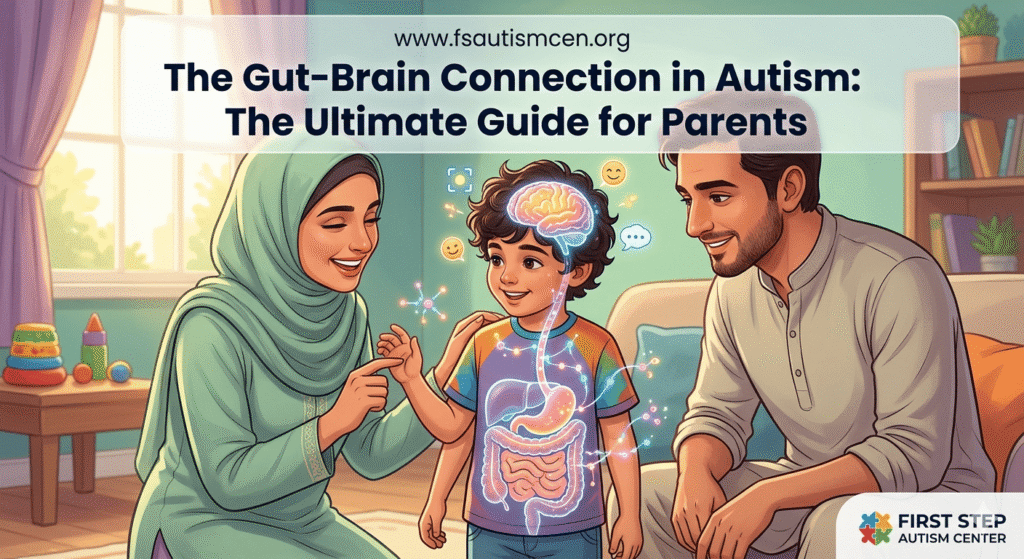
If you’ve noticed that your child’s behavior, mood, or focus seems to change based on what they eat or how their digestion is faring, you aren’t imagining it. For years, parents and researchers have observed a powerful link between the gut and the brain—a connection that is particularly significant for children on the autism spectrum.
In this guide, we’ll explore the “Second Brain” and why supporting your child’s digestive health is a vital step in supporting their overall development.
What is the Gut-Brain Axis?
The Gut-Brain Axis is a two-way communication system between your child’s central nervous system (the brain) and their enteric nervous system (the gut). They are constantly “talking” to each other through nerves, hormones, and the immune system.
Think of it like a high-speed internet connection. When the gut is healthy, the signals sent to the brain are clear and supportive. When the gut is inflamed or out of balance, those signals can become “noisy,” leading to challenges in behavior, sleep, and emotional regulation.
Why the Gut is Called the “Second Brain”
Did you know that about 90% of the body’s serotonin—the “feel-good” chemical responsible for mood and social behavior—is actually produced in the gut, not the brain?
The gut is home to trillions of tiny microbes (the microbiome). These microbes help:
- Produce Neurotransmitters: Like GABA and Dopamine, which help your child stay calm and focused.
- Protect the Brain: By creating a barrier that keeps toxins out of the bloodstream.
- Support the Immune System: Ensuring the body isn’t in a constant state of “high alert” or inflammation.
The Autism Connection: Why Our Children are Vulnerable
Research shows that children with autism are significantly more likely to experience gastrointestinal (GI) issues like constipation, bloating, or chronic diarrhea. When these physical issues occur, they often manifest as “autism symptoms,” such as:
- Increased irritability or meltdowns.
- Difficulty concentrating or “brain fog.”
- Sensory over-responsivity.
- Disrupted sleep patterns.
This happens because an imbalanced gut can lead to Intestinal Permeability, often called “Leaky Gut.” In this condition, the gut lining becomes “leaky,” allowing undigested food particles and toxins to enter the bloodstream and eventually reach the brain.
Explore More: To dive deeper into how this happens, read our detailed post: [Understanding “Leaky Gut”: What It Is and Why It Happens]
Signs of a Gut-Brain Imbalance to Watch For
As a parent, you are the best observer of your child’s health. Look for these “clues” that the gut-brain connection might need support:
- Digestive Discomfort: Frequent bloating, gas, or inconsistent bowel movements.
- Skin Issues: Rashes or eczema, which are often external signs of internal gut inflammation.
- Specific Food Cravings: A strong “addiction” to carbohydrates, sugars, or dairy products.
- Behavioral Spikes: Worsening of self-stimulatory behaviors (stimming) or aggression after certain meals.
The Path Forward: A Holistic Approach
Understanding the gut-brain connection isn’t about finding a “quick fix.” It’s about recognizing that your child’s body is an interconnected system. By monitoring what goes into the gut and identifying potential triggers, you can help clear the “noise” and allow your child’s brain to function at its best.
In our upcoming series, we will break down exactly how to monitor these signs and which specific nutrients are the building blocks for a healthier, happier brain.
Learn More in This Series:
- What Does Leaky Gut Cause? Physical and Behavioral Symptoms
- How Gut Conditions Impact Mood and Communication
- [The Science of the Gut-Brain Axis: A Deeper Look]
- [Why Digestive Issues Can Lead to Sensory Overload]
Warning: The information provided in these blogs is for general informational purposes only. Always consult with a qualified Doctor or healthcare professional before starting any new medicine, supplement, or home remedy. We do not recommend any specific medicine or refer to any specific Doctor.