If you are a parent of a child on the autism spectrum, you have likely noticed that some days are naturally more challenging than others. While environmental factors play a role, research into the gut-brain axis suggests that internal comfort—specifically digestive health—is a major driver of behavior.
When we understand how gut conditions impact mood, we can move beyond simply managing behavior and start addressing the physiological root cause.
Constipation, Pain, and the “Silent” Meltdown
For children with limited verbal communication, physical pain cannot be easily reported. Chronic constipation or gas buildup can cause significant discomfort that manifests externally as:
- Sudden aggression or self-injury.
- Intense meltdowns with no obvious trigger.
- Increased repetitive behaviors (stimming) as a coping mechanism for pain.
A child who is in constant physical discomfort will have a significantly lower threshold for frustration, making emotional regulation nearly impossible.
Inflammation and the “Brain Fog” Barrier
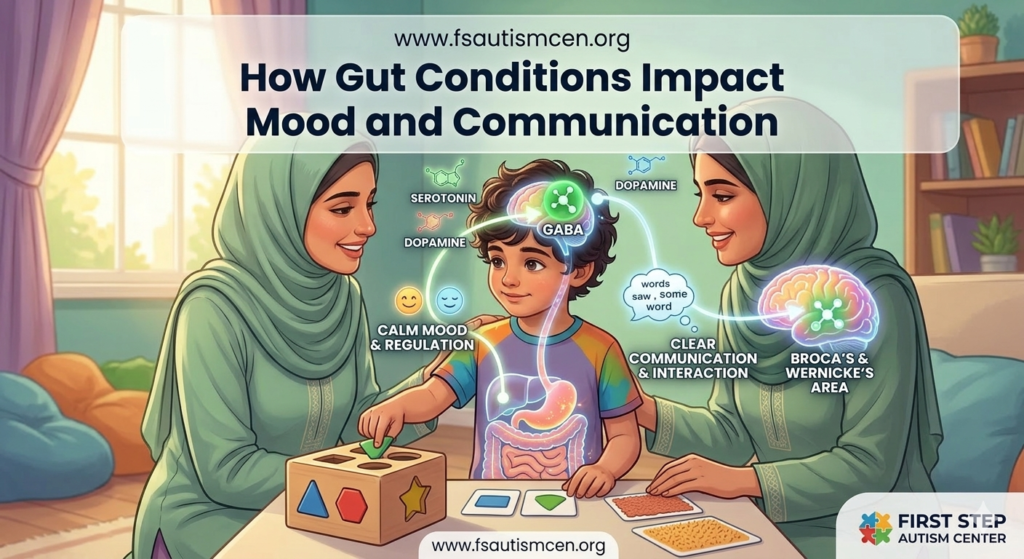
Gut conditions often involve systemic inflammation. When the gut is inflamed, immune signals are sent to the brain, altering the production of key neurotransmitters like serotonin and GABA.
This inflammation directly impacts cognitive function, causing:
- Reduced Processing Speed: Your child may take longer to understand instructions.
- Brain Fog: A state of confusion or lack of focus that makes learning difficult.
- Regression in Communication: A child who was beginning to use words may suddenly stop, as the cognitive energy required for speech is diverted to dealing with internal stress.
GABA, Serotonin, and the Anxiety Loop
As established in our main Gut-Brain Guide, the gut produces a vast majority of the body’s serotonin (mood regulation) and GABA (calmness). When the gut microbiome is imbalanced, production of these “calm” chemicals drops.
This creates a state of physiological anxiety. A child with low GABA is hyper-reactive to their environment, making social communication and interaction feel overwhelming. This is why addressing mood regulation in autism often requires addressing the gut first.
Explore the Full Series:
- The Gut-Brain Connection in Autism: The Ultimate Guide for Parents
- What Does Leaky Gut Cause?
- [The Science of the Gut-Brain Axis: A Deeper Look]
Warning: The information provided in these blogs is for general informational purposes only. Always consult with a qualified Doctor or healthcare professional before starting any new medicine, supplement, or home remedy. We do not recommend any specific medicine or refer to any specific Doctor.