When we discuss the gut-brain connection in autism, one of the most frequent topics is “Leaky Gut” (scientifically known as increased intestinal permeability). But for a parent, the science matters less than the results: how does this condition actually affect your child’s day-to-day life?
Understanding the symptoms of leaky gut in autism can help you identify why your child may be struggling with sudden mood swings, sleep issues, or heightened sensory sensitivities.
Physical Signs of Leaky Gut
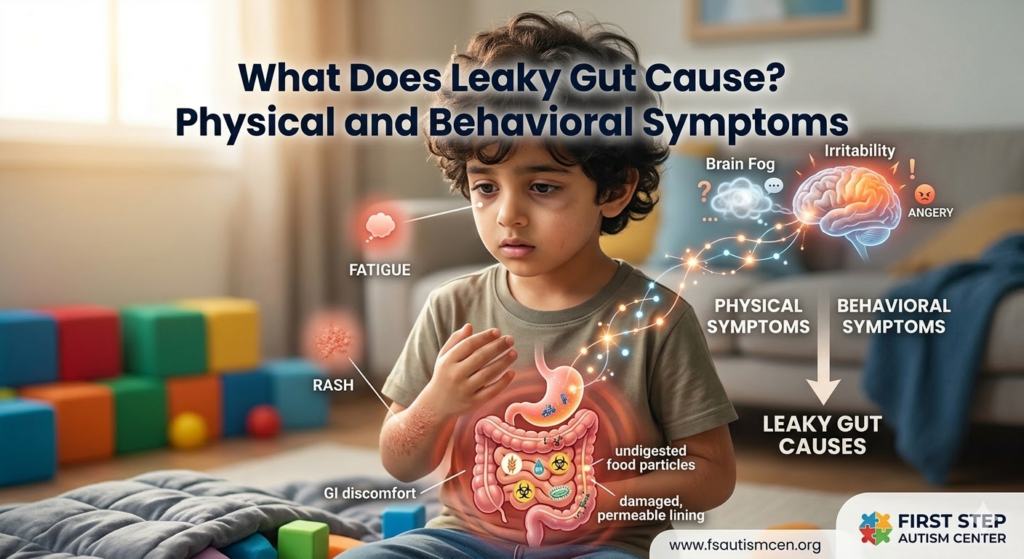
Because the gut is the center of the immune system, physical symptoms often appear first. If your child has a “leaky” intestinal lining, their body is constantly reacting to food particles that shouldn’t be in the bloodstream. Look for:
- Chronic Digestive Issues: Frequent bloating, gas, or stools that are consistently too loose or too hard.
- Skin Flare-ups: Eczema, unexplained rashes, or dark circles under the eyes (often called “allergic shiners”).
- A “Distended” Tummy: A stomach that looks bloated or hard, even if the child is otherwise thin.
- Frequent Illness: A compromised gut lining makes it harder for the immune system to fight off common infections.
Behavioral and Cognitive Symptoms
This is where the gut-brain link becomes most visible. When toxins and undigested proteins cross into the bloodstream, they can trigger systemic inflammation that reaches the brain, leading to:
- Brain Fog: Your child may seem “spaced out,” have trouble following simple instructions, or seem disconnected.
- Increased Irritability: Sudden, unexplained meltdowns that don’t seem to have an environmental trigger.
- Sleep Disturbances: Difficulty falling asleep or waking up frequently in the middle of the night.
- Heightened Sensory Issues: An increase in “stimming” (self-stimulatory behaviors) or becoming suddenly overwhelmed by lights and sounds.
Why Does This Happen?
When the gut leaks, it triggers an immune response. This inflammation affects the areas of the brain responsible for social interaction and emotional control. By identifying these symptoms early, you can work toward a strategy that calms the gut and, in turn, calms the mind.
Explore the Full Series:
- The Gut-Brain Connection in Autism: The Ultimate Guide for Parents
- [How Gut Conditions Impact Mood and Communication]
- [The Science of the Gut-Brain Axis: A Deeper Look]
Warning: The information provided in these blogs is for general informational purposes only. Always consult with a qualified Doctor or healthcare professional before starting any new medicine, supplement, or home remedy. We do not recommend any specific medicine or refer to any specific Doctor.